
Let's start with the sentence you've probably never heard from a doctor: it is genuinely, physiologically harder to lose weight with PCOS. Not impossible — harder. And knowing why changes everything about your approach.
If you're a working woman juggling meetings, family, and a to-do list that never ends, this article is your realistic playbook. No 5 a.m. bootcamps, no 21-day detoxes, no eliminating entire food groups.
Why PCOS makes weight loss harder (it's not willpower)
- Insulin resistance promotes storage. Chronically elevated insulin makes your body more inclined to store energy as fat and more reluctant to release it. Most women with PCOS have some degree of insulin resistance.
- Appetite regulation is disrupted. Some studies suggest altered hunger and fullness signaling in PCOS, which can mean stronger cravings and feeling less satisfied after meals.
- Fatigue and low mood shrink your capacity. PCOS is associated with higher rates of anxiety, depression, and poor sleep — all of which drain the energy that lifestyle change requires.
Read that list again and let one thing land: your past "failures" were not a discipline problem. You were playing a game with different rules and nobody told you.
Why crash diets backfire — especially with PCOS
Severe restriction is a stress on the body. It tends to raise cortisol, increase cravings, slow metabolic rate over time, and almost universally ends in rebound. For PCOS specifically, extreme dieting can worsen the stress–hormone picture you're trying to fix. Research on PCOS consistently supports moderate, sustainable change: even a 5–10% reduction in body weight can meaningfully improve ovulation, insulin sensitivity, and androgen levels.
The realistic weekly framework
1. Anchor your protein (daily)
Protein is the most satiating macronutrient and helps preserve muscle while losing fat. Aim to include a palm-sized portion at every meal — eggs or Greek yogurt at breakfast, chicken, fish, lentils, or paneer later in the day. Most women find cravings drop noticeably within a week or two of consistent protein.
2. Use the balanced-plate method (no counting required)
Half non-starchy vegetables, a quarter protein, a quarter smart carbohydrates, plus a little healthy fat. It automatically moderates calories and steadies blood sugar without the mental load of tracking. When life gets chaotic, the plate method still works at a restaurant, a wedding, or your desk.
3. Walk after your biggest meal (10–15 minutes)
Post-meal movement blunts glucose and insulin spikes. It's the best effort-to-benefit ratio in this entire article. A lunchtime walk, pacing during calls, or an after-dinner stroll all count.
4. Strength train 2–3 times a week (20–30 minutes is enough)
More muscle means better insulin sensitivity and a higher resting metabolic rate. Two or three short sessions — squats, pushups, rows, lunges, at home or in a gym — outperform hours of cardio for body composition in most research on insulin-resistant populations.
5. Sleep like it's part of the plan (because it is)
Short sleep increases hunger hormones, cravings, and insulin resistance. If you consistently sleep 5–6 hours, improving sleep may move the scale more than any food rule. Protect a wind-down window and keep your wake time consistent.
6. Plan for your real week, not your ideal week
Decide in advance what your three busiest days look like: which breakfast is grab-and-go, which lunch is ordered (and what you'll order), which dinner takes 20 minutes. Sustainable weight loss with PCOS is mostly a logistics problem, not a knowledge problem.
What progress actually looks like
With PCOS, expect the scale to move slower than the wellness industry promised you — roughly 0.25–0.5 kg (0.5–1 lb) per week on average is a strong result, and plateaus are normal, not failure. Track non-scale wins too: steadier energy, fewer crashes, better sleep, more regular cycles, clothes fitting differently. Those often improve before the scale does, and they're signs your hormones are responding.
The takeaway
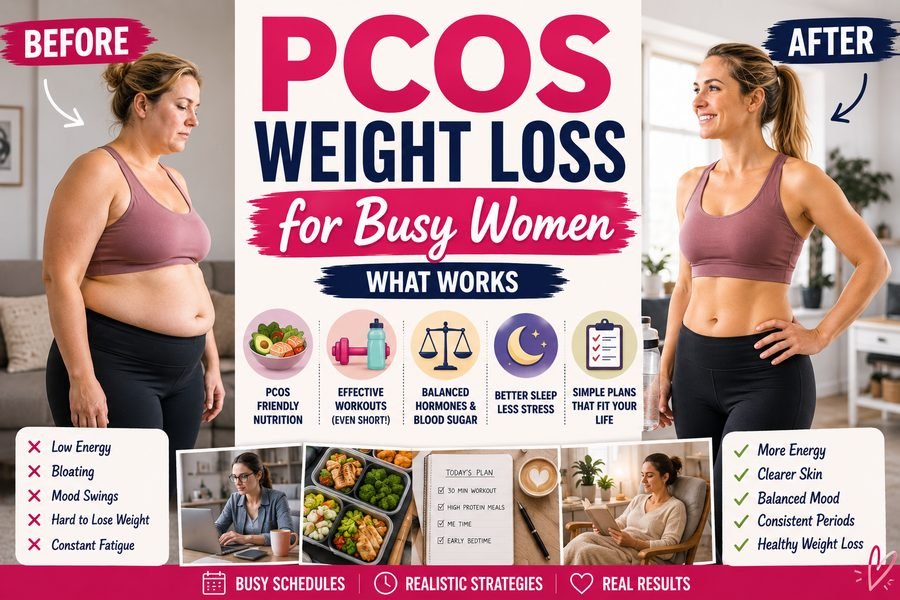
PCOS weight loss for a busy woman comes down to five boring, powerful habits: protein at every meal, balanced plates, walks after meals, a couple of strength sessions, and real sleep. Boring is what works — because boring is repeatable.
Want the structured version? The free PCOS Kickstart Guide turns these habits into a 7-day starter plan.